Climate
9 articles in this section.
Tiny aerosol particles could supercharge tropical storm clouds
Deep, clean tropical clouds may contain the hidden atmospheric fuel that lets tiny particles supercharge storms. Credit: Shutterstock Tiny aerosol particles may be able to strengthen tropical convective…
Scientists detect a sharp acceleration in global warming
Earth’s temperature rise has shifted into overdrive, with the past decade warming faster than any other since modern records began. Credit: Shutterstock Global warming has sped up since…

Some coastal cities are sinking faster than the ocean is rising
Many coastal cities are sinking as seas rise, exposing residents to relative sea-level increases far faster than the global average. Credit: Shutterstock Coastal communities around the world face…
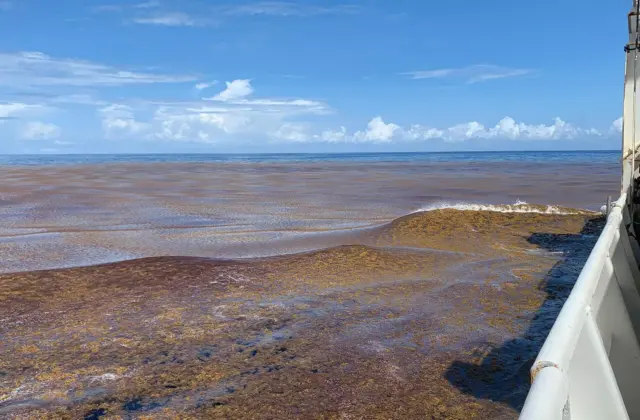
AI reveals a massive algae boom across the world’s oceans
Large Sargassum field. Credit: Ellen Park, Woods Hole Oceanographic Institution Artificial intelligence has helped scientists produce the first comprehensive global assessment of floating algae, revealing that blooms are…
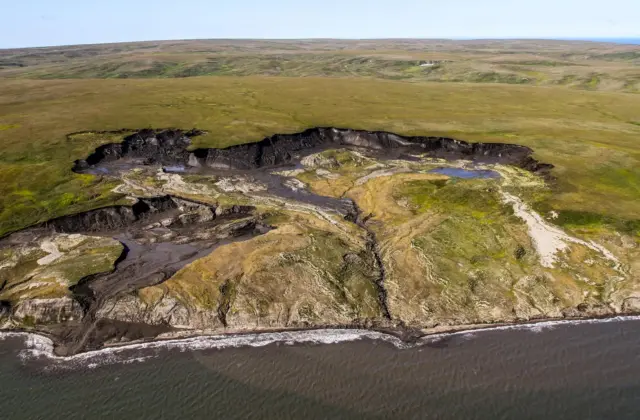
Ancient Arctic carbon is pouring into the sea, but the seabed captures most of it
Permafrost in the Arctic stores large quantities of organic carbon. When the frozen ground thaws or coastal sections erode, this carbon can enter the sea, where microorganisms can…
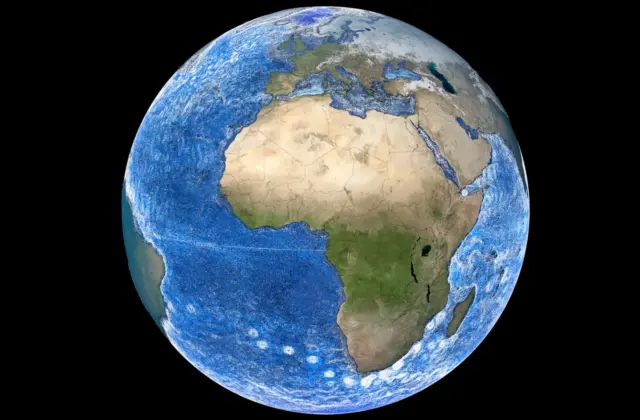
The AMOC stayed strong even as a major ocean “lifeline” nearly shut down
Agulhas Leakage (visualized by white dots circumventing Southern Africa) entering the Atlantic Ocean. Credit: NASA’s Goddard Space Flight Center Scientists have long believed that warm, salty water flowing…
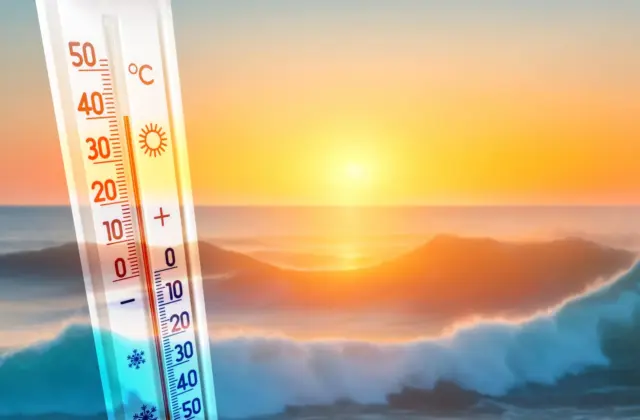
Marine heatwaves are harming human health in surprising ways
Superheated oceans aren’t just killing marine life—they may also be threatening our food, safety, livelihoods, and mental health. Credit: Shutterstock Marine heatwaves are increasingly being recognized as more…
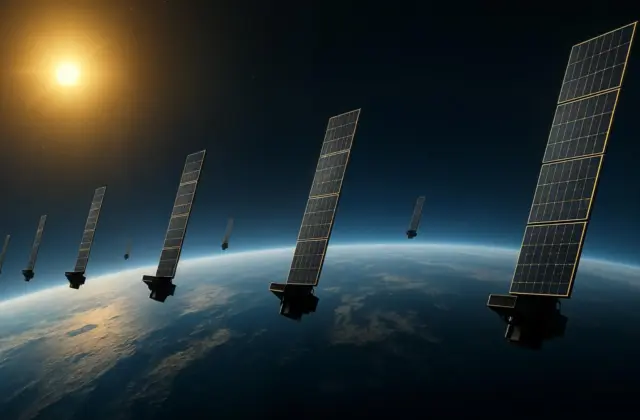
Scientists turn Starlink into a giant scanner for Earth’s upper atmosphere
Thousands of Starlink satellites have helped scientists create a new map of the thin upper atmosphere hundreds of kilometers above Earth. Credit: Shutterstock The region surrounding Earth is…
The Atlantic Ocean can handle more warming than expected — with one big catch
The Atlantic’s massive ocean circulation may not have a fixed temperature breaking point—how fast the planet warms could determine whether it survives or collapses. Credit: Shutterstock For years,…